


A good and principled man is dangerous not because he seeks destruction, but because he cannot be easily controlled. In every age of history, societies have feared men who possess strong moral conviction, discipline, and courage.
A weak man bends under pressure. A corrupt man can be bought. But a principled man stands firm even when the world demands compromise. That kind of strength unsettles people. Let’s have a look at some of the reasons we think makes a man dangerous and why.
Misunderstood danger of a good man
We are often taught to believe that “dangerous” is a synonym for “bad.” We picture the bully, the tyrant, or the violent criminal. But there is a deeper, more unsettling truth explored by thinkers like Jocko Willink and Jordan Peterson: the most truly dangerous man in any room isn’t the unhinged aggressor—it’s the good and principled one. His danger doesn’t stem from a lack of morality, but from its profound presence. This is the paradox of the peaceful warrior.
Dangerousness is often misunderstood because people imagine violence, chaos, or cruelty. Yet the most powerful form of danger is the ability to resist corruption. A principled man becomes dangerous to lies because he speaks truth.
He becomes dangerous to manipulation because he thinks independently. He becomes dangerous to oppression because he refuses to bow his conscience for comfort, approval, or profit.
A good man with no backbone is harmless. He may have kind intentions, but without discipline and conviction, he cannot protect anything meaningful.
Principles without strength are fragile.
But when goodness is joined with courage, intelligence, and restraint, it creates a force capable of changing families, communities, and nations.
The Monster is just properly chained
The core of this idea lies in the integration of one’s capacity for darkness. A harmless man is simply that: harmless. He poses no threat, not because he is virtuous, but because he is incapable of violence, confrontation, or ferocity. His peace is a default, not a choice.
A good man, however, is acutely aware of his own capacity for aggression—his “inner monster,” as Peterson often describes it. He knows he can be harsh, forceful, and even dangerous. The critical difference is that he has not suppressed this monster; he has trained it, understood it, and brought it under conscious, principled control. His restraint is an active, disciplined choice made every day. This makes his peace volitional and, therefore, incredibly powerful.
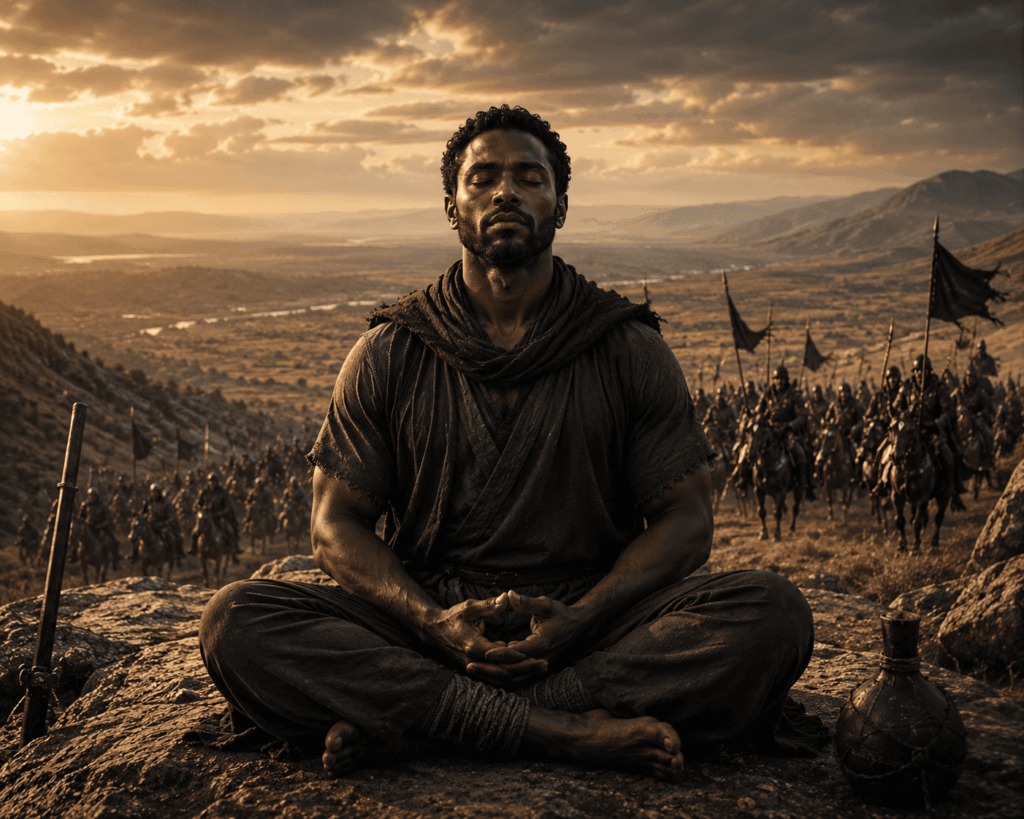
He is dangerous because he can inspire others. History repeatedly proves this reality. Tyrants fear principled men more than violent criminals. Criminals can be managed through fear or reward. But a man who is guided by conscience rather than convenience is unpredictable to corrupt systems.
He cannot easily be bribed, intimidated, or seduced into betrayal. That is why many reformers, prophets, leaders, and revolutionaries throughout history were viewed as threats long before they were celebrated.
True character is contagious. One disciplined individual can expose the weakness, laziness, or dishonesty of an entire group without speaking a word. His example challenges people to rise higher. Some will admire him for it. Others will resent him because his integrity reminds them of their own compromises.
“A single soul grounded in integrity, discipline, and purpose can inspire generations to rise higher, live better, and walk boldly in truth.”
This kind of man is dangerous in relationships as well. He does not tolerate manipulation, disrespect, or deception. He establishes boundaries and lives by standards. He is capable of love, but his love is not weakness. It is anchored in responsibility and self-control. Because he values truth over temporary comfort, he is willing to have difficult conversations and make difficult decisions when necessary.
He stands as a bulwark against chaos
A principled man doesn’t operate on mere impulse or convenience. He operates from a set of deeply held first principles—unchanging truths about honor, integrity, and responsibility. Think of this as a gyroscope that keeps a ship upright in a hurricane.
When external pressure mounts, chaos erupts, or moral ambiguity clouds a situation, he doesn’t crumble. He consults his internal compass.
This makes him dangerous to anyone or anything that relies on deception, corruption, or intimidation. You cannot buy a man whose ultimate loyalty is to his principles, not profit. You cannot bully a man whose sense of self-worth comes from his own ethical conduct, not your opinion of him. He is a black hole for coercion; pressure simply makes him more definite and resolute.
There is also a physical and protective dimension to principled danger. A good man should possess the capacity for strength and defense, even if he chooses peace. Peace without the ability to confront evil is merely helplessness.
The safest societies are not built by weak people, but by disciplined individuals who choose restraint despite having power. A principled man understands this distinction. He does not seek conflict, but he does not run from it when justice requires action.
However, the danger of a principled man must always remain governed by wisdom. Strength without morality becomes tyranny. Conviction without humility becomes fanaticism. The truly dangerous man is not ruled by rage, ego, or revenge. He is ruled by principles larger than himself. His power is controlled power. His discipline is voluntary. His restraint is intentional.
He posses uncompromising strength in a nihilistic world
Modern culture often celebrates comfort, passivity, and moral flexibility. People are encouraged to avoid offense, avoid conflict, and adapt themselves to every shifting trend.
In such an environment, a principled man stands out sharply. He knows who he is. He knows what he believes. He cannot be easily reprogrammed by public opinion or social pressure. That independence alone makes him formidable.
A good and principled man is dangerous because he combines virtue with strength. He has the ability to confront darkness without becoming dark himself. He can protect without oppressing. He can lead without exploiting. And perhaps most importantly, he reminds the world that true power is not found in domination, but in disciplined character.
We live in a world that often offers a false dichotomy: be a dominant, unfeeling aggressor, or be a passive, harmless nice guy. The principled man rejects both as weak. He forges a third path: extreme competence paired with deep humility.
Jocko Willink’s concept of “Extreme Ownership” embodies this perfectly. This man takes full responsibility for everything in his world, meaning he has the agency and power to act. He develops real, practical skills—the ability to protect, to provide, to lead, and to endure. He is dangerous not because he wants to dominate others, but because he has cultivated a level of self-mastery that makes him fiercely effective at defending the innocent, upholding his values, and standing alone against the crowd. His strength is not for aggression, but for safeguarding.
Why the world needs this dangerous goodness right now
A man who is good but not capable of great danger is merely a well-intentioned weakling. He cannot protect his family from a physical threat. He cannot stand firm against a corrupt institution. His goodness is a fragile flower, beautiful but easily crushed.
The world needs the specific danger of a principled man for several reasons:
He Sets a Standard: His quiet, uncompromising presence convicts the conscience of a room without a single word.
He Shields the Vulnerable: He willingly walks into the arena, absorbing the danger so others don’t have to, because he has the capacity to do so.
He Tells the Truth: Especially when it’s costly. His relationship with truth is non-negotiable, making him an enemy of all forms of manipulative darkness.
It’s a wild world we live in, stay dangerous friends.
In God’s name, the most Gracious, the most Merciful!
Praise be to God, All is good from God.
Tate

